
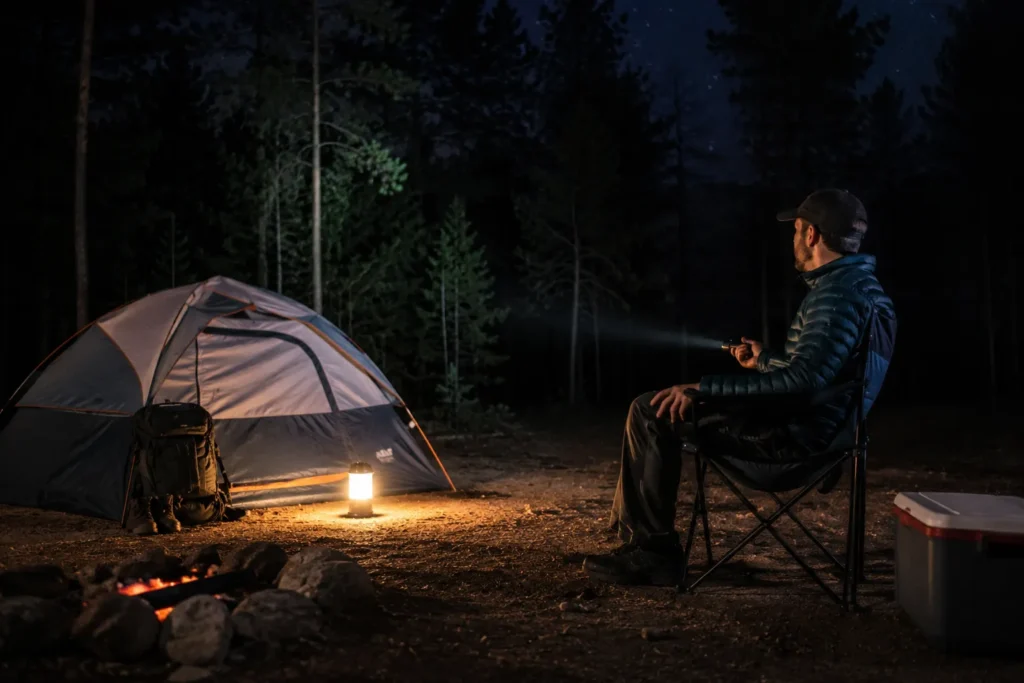
Campsite safety becomes even more important after sunset. According to the U.S. National Park Service, more than 325 million visits were recorded across national parks in 2024. Millions of people camp each year, making nighttime awareness essential. A campsite offers relaxation and adventure, but darkness creates additional risks that require preparation.
Proper planning reduces accidents, theft, wildlife encounters, and navigation problems. Data from the National Safety Council shows that falls and outdoor injuries increase during low-light conditions. We can avoid many issues by following proven safety practices and using reliable equipment. Simple measures often provide the greatest protection.
Experienced campers recommend combining lighting, communication, and organization. Campground managers also encourage visitors to follow quiet hours and maintain awareness of their surroundings. Staying safe at night on a campsite does not require expensive gear. Instead, it requires smart habits and consistent preparation. Understanding the risks before nightfall helps create a safer and more enjoyable camping experience.
Why Nighttime Safety Matters at a Campsite
Understanding Common Risks
Darkness changes how we experience a campsite. Visibility decreases, temperatures drop, and wildlife activity often increases. According to the Centers for Disease Control and Prevention, slips and falls remain among the most common outdoor injuries in the United States.
Several risks deserve attention:
- Tripping over tent lines and rocks.
- Getting lost after leaving camp.
- Wildlife are searching for food.
- Theft of unattended valuables.
- Exposure to cold temperatures.
- Fire hazards from lanterns or campfires.
Professional outdoor guide James Bradley, who has led camping trips for 18 years, explains that preparation before sunset prevents most nighttime emergencies. He recommends organizing equipment while daylight remains available.
We found during several family camping trips in Colorado and Wyoming that keeping essential items in the same location greatly reduced stress after dark. Even simple routines improved overall campsite safety and comfort.
Essential Lighting and Visibility Tips
Use Reliable Light Sources
Good lighting creates a safer campsite environment. The Outdoor Industry Association reported in 2024 that 71% of campers carry rechargeable headlamps because they provide hands-free illumination.
Different lighting options serve unique purposes.
| Lighting Equipment | Average Runtime | Typical Price |
|---|---|---|
| LED Headlamp | 20 hours | $25 |
| Rechargeable Lantern | 12 hours | $40 |
| Solar Camp Light | 8 hours | $30 |
| Flashlight | 15 hours | $18 |
Experienced campers recommend carrying at least two independent light sources. Backup batteries should remain accessible inside the tent.
We personally discovered that placing a lantern near the tent entrance prevented accidental trips during late-night bathroom visits. Reflective tent ropes also improved visibility. These inexpensive upgrades increased safety significantly.
Mark Your Campsite Clearly
Visibility helps everyone navigate safely. Place battery-powered lights around major obstacles and pathways. Reflective tape on tent stakes reduces injuries caused by unseen lines.
Many organized campgrounds require quiet hours beginning at 10:00 PM. Maintaining proper lighting allows movement without disturbing neighboring campers. Start your journey with our camping guide.
Protect Yourself From Wildlife and Strangers
Secure Food and Valuables
Wildlife encounters become more common after sunset. The National Park Service advises campers to store food at least 100 feet from sleeping areas when bear lockers are unavailable.
Important precautions include:
- Store food inside sealed containers.
- Never keep snacks inside sleeping bags.
- Lock valuables inside vehicles.
- Keep car keys accessible.
- Avoid leaving electronics unattended.
During a three-night camping trip near Yellowstone, we used odor-proof containers and experienced no wildlife disturbances. Nearby campers who left food outside attracted raccoons shortly after midnight.
Stay Aware of Your Surroundings
Personal awareness matters on every campsite. Introduce yourself to nearby campers during daylight. Familiar faces increase security and improve communication during emergencies.
Outdoor survival instructor Megan Foster recommends carrying a whistle capable of producing 120 decibels. A whistle reaches farther than shouting and conserves energy.
Cell phones should remain charged. Portable power banks with 10,000 mAh capacity can recharge most smartphones twice. Emergency contact information should also remain accessible.
Prepare for Weather and Emergency Situations
Create a Nighttime Emergency Plan
Preparation provides confidence. Weather conditions can change quickly, especially in mountainous regions. The National Oceanic and Atmospheric Administration recorded more than 28 severe weather disasters across the United States in 2024.
Every campsite should include emergency essentials:
- First aid kit.
- Extra blankets.
- Water supply.
- Backup batteries.
- Weather radio.
- Emergency whistle.
- Portable charger.
Family members should know where supplies are located. Children should understand boundaries and basic emergency procedures.
Maintain Fire Safety
Campfires create warmth but demand responsibility. The National Fire Protection Association reports that unattended fires contribute to thousands of outdoor incidents annually.
Experts recommend these guidelines:
- Keep fires at least 15 feet from tents.
- Never leave flames unattended.
- Extinguish fires completely before sleeping.
- Use water and stir ashes thoroughly.
- Store fuel away from heat sources.
Following these rules helps maintain a safe campsite environment throughout the night.
Conclusion
Nighttime safety on a campsite depends on preparation and awareness. Reliable lighting, proper food storage, emergency planning, and fire safety reduce most risks. Outdoor experts agree that organization before sunset creates a safer experience after dark.
Real camping experience also shows that simple habits provide the greatest protection. By understanding potential hazards and preparing carefully, we can enjoy peaceful evenings outdoors with greater confidence. A well-managed campsite allows everyone to focus on relaxation, nature, and memorable adventures while staying protected throughout the night.